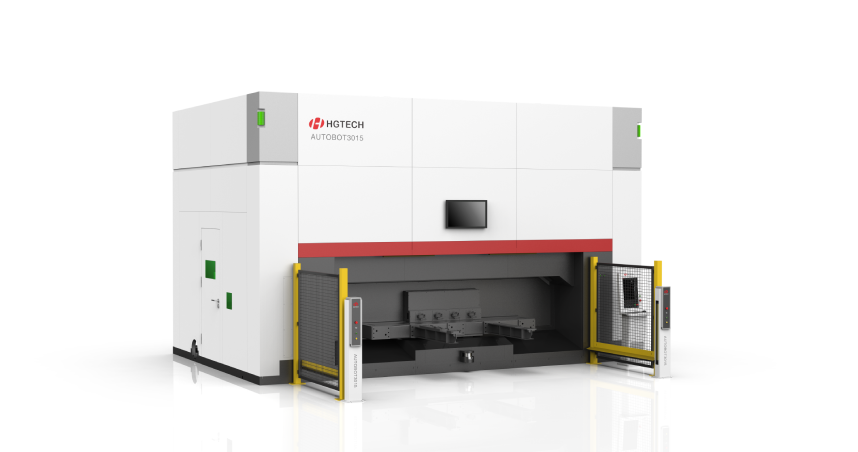
Wuhan, Hubei Mar 24, 2026 (Issuewire.com) - The automotive industry is currently navigating a period of unprecedented transformation. As the global market shifts toward lightweight construction, electrification, and intelligent systems, the traditional manufacturing landscape is being redefined. In this context, the demand for high-strength steel and complex, three-dimensional components has surged, placing immense pressure on conventional processing methods. To meet these rigorous standards of precision and efficiency, the integration of Professional Industrial 3D Laser Cutting Machines Solutions has become a cornerstone of modern production. These advanced Industrial 3D Laser Cutting Machines are specifically engineered to handle the intricate geometries of hot-formed parts, safety components, and structural frames, ensuring that manufacturers can maintain high throughput without compromising on structural integrity.
The Future of Automotive Manufacturing
The shift toward electric vehicles has added a new dimension of complexity to automotive manufacturing. Unlike conventional vehicles, EVs carry the substantial weight of battery packs, electric motors, and power electronics pushing average vehicle weight 20 to 30 percent higher than combustion-engine equivalents. This weight penalty directly undermines the range efficiency that electrification promises, creating an urgent industrial imperative: automakers must offset the mass added by electrification through aggressive lightweighting across the body structure and battery system.
The materials that enable this lightweighting strategy thermoformed ultra-high-strength steel for safety-critical body components, and aluminum alloys for battery enclosures, chassis subframes, and structural panels are precisely the materials that conventional processing methods cannot handle reliably. Thermoformed high-strength steel hardens well beyond the reach of standard stamping tools after press-hardening, making precise trimming of complex three-dimensional contours impossible without laser technology. Aluminum alloy structures demand precision welding with tightly controlled heat input to prevent distortion and preserve structural integrity. At the same time, the industry's pursuit of further weight reduction is driving the adoption of tailored blank technology joining materials of different thicknesses or grades before forming which requires laser welding precision that mechanical processes cannot provide. Across every dimension of the lightweighting challenge, laser processing has become the enabling technology.
HGTECH addresses this directly, providing an integrated portfolio of laser cutting and welding solutions purpose-built for the materials, geometries, and production volumes that lightweight electric vehicle manufacturing demands.
Legacy of Innovation: Merging Heritage with Intelligence
The technological prowess of HGTECH is rooted in a unique synthesis of global expertise and localized innovation. By integrating the century-long technical foundation of Farley Laserlab with cutting-edge intelligent control systems, the company has established itself as a leader in the Body-in-White (BIW) sector.
HGTECH's laser welding and cutting work for automotive manufacturing earned China's National Science and Technology Progress Award First Prize, with technology already deployed across more than 313 enterprises. That same process knowledge now underpins the company's response to the lightweighting challenge: 3D five-axis laser cutting systems that process hot-formed structural parts with the speed and precision mass production requires; aluminum alloy battery tray welding lines that deliver hermetic, distortion-free joints in lightweight enclosures; laser tailor-welded blank lines that enable variable-thickness body structures; and full body-in-white laser welding solutions serving major OEMs at scale. Today, HGTECH builds not just machines, but the process infrastructure that allows manufacturers to meet the structural and weight demands of next-generation vehicles at production scale.
More On Showupnews ::
- Gideon Group CEO Salman Z. Khan Publishes LinkedIn Analysis on AI’s Impact on Mid-Level Roles
- XRP contract upgrade, DL Mining app: opening the era of zero-threshold BTC and DOGE mining on smartphones
- From Protector of the Skies to Preserver of Culture: IAF Veteran Anand Kumar Ashodhiya’s Literary Odyssey
- Diane Colburn, Recognized by BestAgents.us as a 2025 Top Agent
- Professional Pulse Magazine Celebrates One Year of Empowering Voices Globally
Engineering the Perfection: Core 3D Cutting Systems
To address the diverse needs of the automotive sector, HGTECH has refined two primary categories of 3D laser solutions, each optimized for specific manufacturing environments.
The AUTOBOT 3015: 3D Five-Axis Laser Cutting
The AUTOBOT 3015 is a high-performance 3D five-axis laser cutting system specifically designed for the high-volume cutting of automotive high-strength steel hot-formed parts. Featuring a gantry structure with a full flying optical path, it delivers exceptional dynamic performance and 24-hour continuous production capability.
- Precision and Speed:Featuring an X/Y/Z-axis positioning accuracy of ±0.03mm and a repeat positioning accuracy of ±0.02mm with A/C-axis positioning accuracy of 0.015° and repeat positioning accuracy of 0.005° the AUTOBOT 3015 is engineered for the demanding environment of hot-forming production lines. With a maximum X/Y/Z-axis positioning speed of 100m/min and maximum X/Y/Z-axis acceleration of 1.0G, it significantly reduces cycle times for complex structural parts such as A-pillars, B-pillars, and anti-collision beams..
- Multi-Dimensional Agility:Equipped with a high-performance 3D cutting head featuring unlimited C-axis rotation (±n×360°) and A/C-axis maximum positioning speed of 720°/s, the system handles small-angle part cutting, automatic focus adjustment, and rapid piercing with ease, navigating the complex contours of modern vehicle body structures.
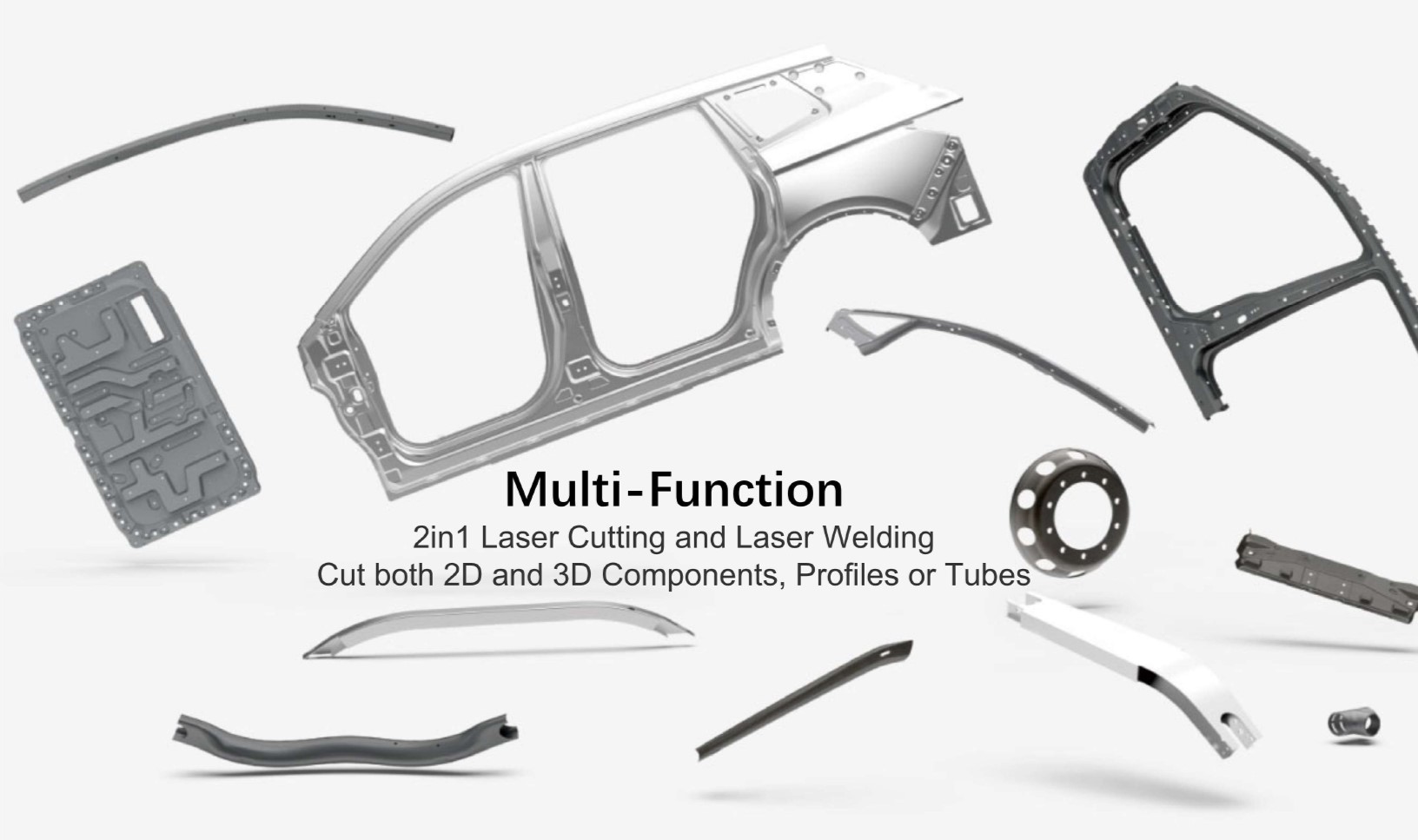
- Broad Application Coverage:With a processing envelope of 3×1.5m, the AUTOBOT 3015 supports hole-cutting and edge-trimming of hot-formed parts including A-pillars, B-pillars, C-pillars, front/rear floors, wheel arches, anti-collision beams, front longitudinal beams, and reinforcements. It also supports cutting of aluminum alloys and thick high-strength steel plates.
3D Robotic Laser Cutting Systems
For applications requiring greater spatial flexibility and adaptability, HGTECH's 3D robotic laser cutting systems provide a versatile alternative. Available in single-robot and dual-robot configurations, these systems utilize fiber lasers for metal cutting and gas lasers for non-metallic materials such as automotive bumpers and interior plastic components.
The robotic systems are particularly well-suited for processing complex three-dimensional surface parts, offering flexible workstation layouts and efficient cycle times. The dual-robot version further improves throughput by enabling simultaneous processing on two workstations.
Transforming the Automotive Value Chain
The application of HGTECHs 3D laser solutions extends across the entire vehicle assembly process, providing measurable improvements in quality and cost-efficiency.
Body-in-White (BIW) and Structural Integrity
In BIW applications, 3D laser cutting allows for the precise trimming of panels after they have been stamped or formed. This ensures a perfect fit during the welding phase, enhancing the overall rigidity of the chassis while supporting lightweight design goals.
Airbag Laser Scoring
Safety is non-negotiable in automotive design. HGTECHs laser weakening technology provides precise, controlled-depth etching on dashboard materials. This ensures that the airbag can deploy flawlessly in milliseconds, without leaving visible marks on the interior surface or compromising the structural integrity of the panel.
Interior and Exterior Trim
For bumpers and plastic interior components, the non-contct nature of laser processing is a significant advantage. It eliminates the need for physical molds and prevents the mechanical deformation often caused by traditional trimming tools. The result is a clean, burr-free edge that requires no secondary polishing.
The Clean Energy Frontier
The shift toward EVs has introduced new challenges, such as the processing of large battery pack trays and hydrogen fuel cell bipolar plates. HGTECH provides integrated welding and cutting solutions that handle these specialized materials with high thermal control, ensuring the hermetic sealing and structural durability required for battery enclosures.
Why Industry Leaders Choose HGTECH
In a global market, the value of a solution is measured by its total cost of ownership and its contribution to long-term operational stability. HGTECH differentiates itself through three core pillars:
- Cost-Effectiveness and Efficiency:By optimizing the supply chain and leveraging proprietary core technologies, HGTECH offers solutions that rival the performance of premium international brands while providing faster delivery cycles and a more favorable return on investment.
- Smart Factory Integration:Recognizing that the future of manufacturing lies in data, HGTECHs systems are designed for seamless integration with Manufacturing Execution Systems (MES). This allows for real-time monitoring, predictive maintenance, and full traceability of every part produced on the line.
- Global Support Infrastructure:With more than 30 service centers worldwide and a 24-hour response protocol, the company ensures that global production lines remain operational. This localized support minimizes downtime and provides manufacturers with the confidence to scale operations across different regions.
Conclusion: Partnering for a Better World
As the automotive industry continues to evolve, the role of high-precision laser technology will only become more vital. HGTECH remains committed to its mission: "Innovation Fuels a Better World." By pushing the boundaries of what is possible in 3D laser processing, the company is not just providing machinery; it is empowering manufacturers to build safer, lighter, and more sustainable vehicles.
For global automotive manufacturers seeking to explore the next frontier of Industrial 4.0, HGTECH offers the expertise and the technological foundation to turn complexity into a competitive advantage.
To learn more about advanced 3D laser solutions, please visit: https://www.hglaserglobal.com/
Source :Wuhan HGLaser Engineering Co.,Ltd
This article was originally published by IssueWire. Read the original article here.
1 month ago